


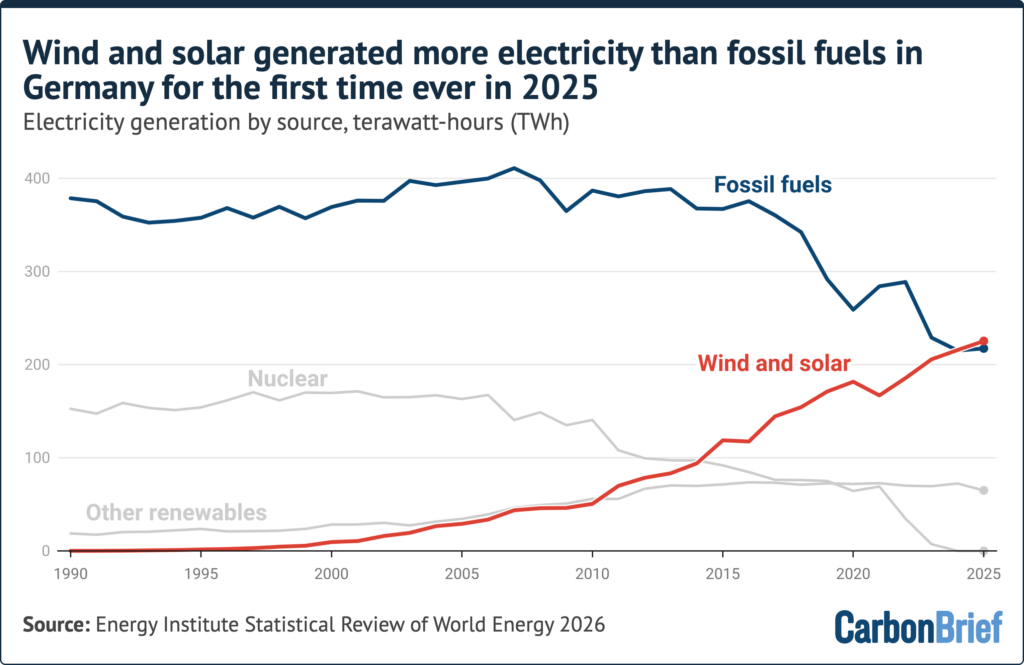
Wind and solar generated more public net electricity in Germany than fossil fuels in 2025 for the first time, according to analysis by the Fraunhofer Institute for Solar Energy Systems. The milestone reflects the rapid expansion of solar power, although Germany still faces challenges involving grid capacity, storage and fossil-fuel back-up.
What changed in Germany’s power mix
Fraunhofer ISE reported that wind remained Germany’s largest source of public net electricity in 2025, while solar generation reached a new high. The comparison concerns electricity supplied to the public grid and should not be confused with the country’s entire energy system, which also includes transport, heating and industrial fuel use.
The result strengthens the case that large electricity systems can accommodate growing shares of variable renewable power. However, weaker wind conditions during the year and increased gas-fired generation also showed why flexible generation, storage and stronger networks remain important.
Lessons for UK energy policy
Germany’s experience is relevant to the UK because both countries are trying to expand renewable generation while maintaining affordability and security of supply. Consistent investment in transmission networks, storage and demand flexibility will be essential as the share of weather-dependent power increases.
The milestone does not mean that Germany has completed its energy transition. Coal and gas still play significant roles, and the country must continue to address network congestion, industrial demand and periods of low renewable output.
Read more about the political risks behind Britain’s power supply.
Read Fraunhofer ISE’s analysis of German electricity generation in 2025.