


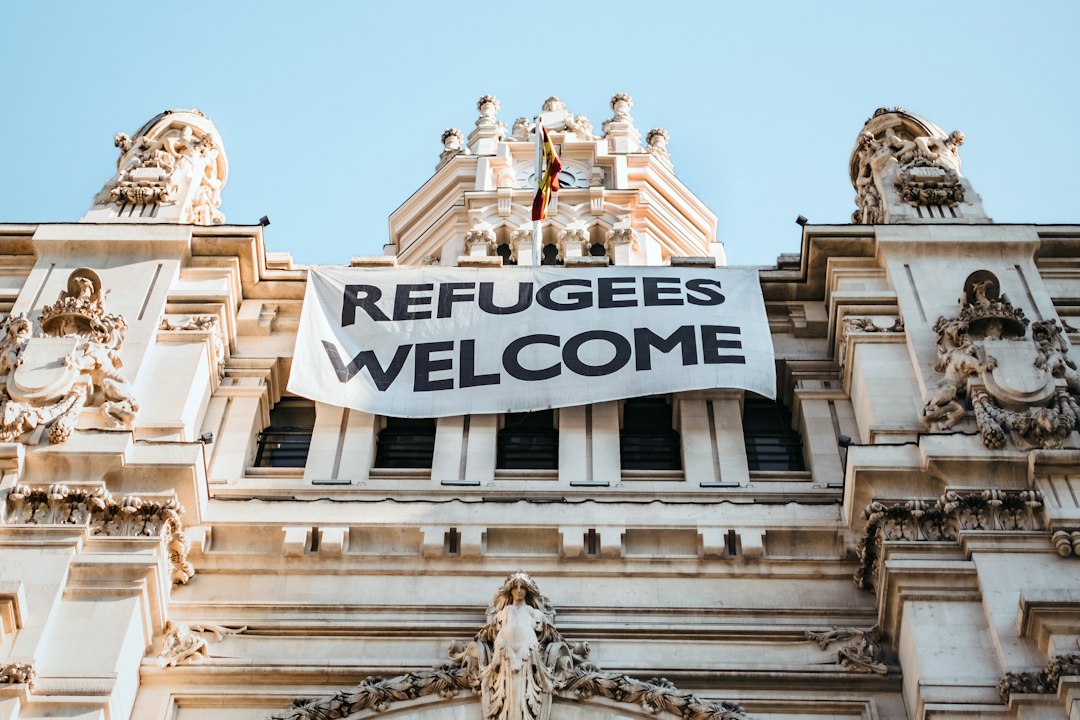
Refugee protection operates at a complex intersection of international law, domestic public administration, and national sovereignty. For observers of British public policy and global affairs, discussions around sanctuary often oscillate between sweeping moral rhetoric and administrative frustration. Yet the actual architecture of protection is built not on broad political sentiment, but on precise legal obligations, codified definitions, and distinct statutory limits. Understanding this framework requires separating the formal rules of international treaties from the practical pressures facing modern governments, including those navigating geopolitical risk across shifting global borders.
At the foundation of this system is the international definition established by the 1951 Refugee Convention and its 1967 Protocol. According to these texts, a refugee is an individual who is outside their country of nationality or habitual residence, and who is unable or unwilling to return because of a well-founded fear of persecution on account of race, religion, nationality, membership of a particular social group, or political opinion. This definition is narrow by design. It excludes economic migrants, individuals fleeing general poverty, and those displaced purely by environmental disasters unless those factors intersect directly with one of the five specified grounds of persecution.
Distinguishing Categories: Refugees, Asylum Seekers, and Migrants
Precision in terminology is essential for any serious policy discussion. Conflating distinct legal categories obscures both the duties of the state and the rights of the individual. Legal definitions create clear operational boundaries:
- Refugees: Individuals whose claim to fear persecution has been formally assessed and recognized through a legal determination process, granting them specific treaty-based rights.
- Asylum Seekers: Persons who have crossed an international border and formally applied for sanctuary, but whose claims have not yet been adjudicated by the host state.
- Migrants: Individuals who relocate across borders primarily for economic betterment, education, family reunification, or lifestyle reasons, outside the formal criteria of international protection frameworks.
While an asylum seeker may ultimately become a recognized refugee, the act of seeking asylum is not synonymous with holding refugee status. States retain the sovereign prerogative to examine individual claims to determine whether the legal threshold of persecution is met. During this assessment window, the integrity of domestic administrative systems and international obligations are simultaneously tested.
Core Legal Obligations: Non-Refoulement and Fair Process
Once an individual claims protection within a jurisdiction, several binding legal duties attach to the host state. The most critical principle in international refugee law is non-refoulement. Codified in Article 33 of the 1951 Convention and reinforced by customary international law and various human rights instruments, non-refoulement prohibits states from expelling or returning a refugee in any manner whatsoever to the frontiers of territories where their life or freedom would be threatened on account of their race, religion, nationality, membership of a particular social group, or political opinion.
This principle forms the baseline of lawful state behavior. However, non-refoulement does not operate in a vacuum. It is paired with the procedural requirement for a fair and effective asylum process. A state cannot lawfully meet its obligations simply by blocking entry or summarily removing applicants without evaluating the merits of their risk claims. Access to a credible determination procedure ensures that individuals are neither wrongly returned to danger nor granted status without meeting the rigorous criteria of the Convention.
Furthermore, while an asylum claim is being assessed, basic protection standards apply. These include provisional safety from immediate deportation, lawful presence pending a final decision, and access to essential provisions such as basic housing, emergency medical care, and subsistence support. These measures are designed to maintain administrative order and human dignity while the state reviews the case.
The Statutory Limits of Protection
A frequent point of public misunderstanding involves the boundary where statutory obligations cease. The international protection framework does not grant an unlimited right of settlement, nor does it strip sovereign states of their authority to manage borders, regulate labour markets, or deport individuals whose claims have been lawfully rejected.
The Convention explicitly outlines exclusion clauses and cessation clauses. Individuals who have committed serious non-political crimes, war crimes, or acts contrary to the purposes and principles of the United Nations are excluded from refugee status, regardless of the severity of the danger they might face if returned. Similarly, protection ceases if the circumstances that led to an individual’s recognition as a refugee have ceased to exist, meaning the home country is no longer dangerous or conditions have fundamentally transformed.
Beyond these exclusions, domestic legal systems retain broad discretion over the integration rights of recognized refugees. Matters such as family reunification pathways, access to social welfare benefits, permanent residency timelines, and paths to citizenship are largely determined by national legislation rather than rigid international mandates. This distinction explains why protection standards vary significantly across different democratic jurisdictions, even among signatories to the same foundational treaties.
Domestic Consent Versus Binding International Obligations
Policy debates in Westminster and other Western capitals often revolve around two competing principles: the imperative of upholding binding international commitments and the necessity of maintaining domestic political consent. Both arguments carry substantial weight within modern public policy.
Proponents of the binding-obligation argument emphasize that the post-World War II international legal order was constructed precisely to prevent the catastrophic refoulement policies seen during the 1930s and 1940s. From this perspective, treaty commitments are not optional policy preferences that can be discarded when politically inconvenient; they are permanent legal constraints that preserve the rule of law and international stability. Undermining these norms weakens the broader web of international agreements that govern state interactions, trade, and security.
Conversely, the domestic-consent argument posits that democratic governance relies on public confidence in the state’s ability to control its borders, manage public expenditure, and maintain social cohesion. When asylum systems experience severe backlogs, administrative strain, or high volumes of unauthorized arrivals, public trust erodes. Advocates of this view maintain that a sustainable protection regime requires enforceable removal mechanisms for failed asylum seekers, clear distinctions between legal and unauthorized entry, and orderly processing channels that prevent system overload.
Navigating these two imperatives requires institutional realism. Simplistic legal solutions or inflammatory political rhetoric rarely address the structural realities of global displacement and administrative capacity. British policy must balance its historical and legal commitments under international treaties with the practical necessity of running a fair, orderly, and publicly accountable immigration system. Ultimately, defining the boundaries of sanctuary requires continuous calibration between what the law demands and what the state can effectively and fairly administer.
References:
- United Nations High Commissioner for Refugees (UNHCR). The 1951 Convention Relating to the Status of Refugees and its 1967 Protocol. Available at: https://www.unhcr.org/about-unhcr/who-we-protect/refugees
- International Migration Law Series. Glossary on Migration, International Organization for Migration (IOM).
- UK Home Office. Asylum policy instructions and statistical reporting frameworks on asylum claims and decision outcomes.