


Green Policy

How Britain’s Carbon Budgets Hold Governments to Account

Carbon Budgets UK and Climate Accountability
Share

Britain’s carbon budgets are designed to turn a distant climate target into a series of nearer-term legal limits. Instead of asking only whether the UK is on course for net zero, the system asks a more immediate question: how much greenhouse gas can the country emit during each five-year period?
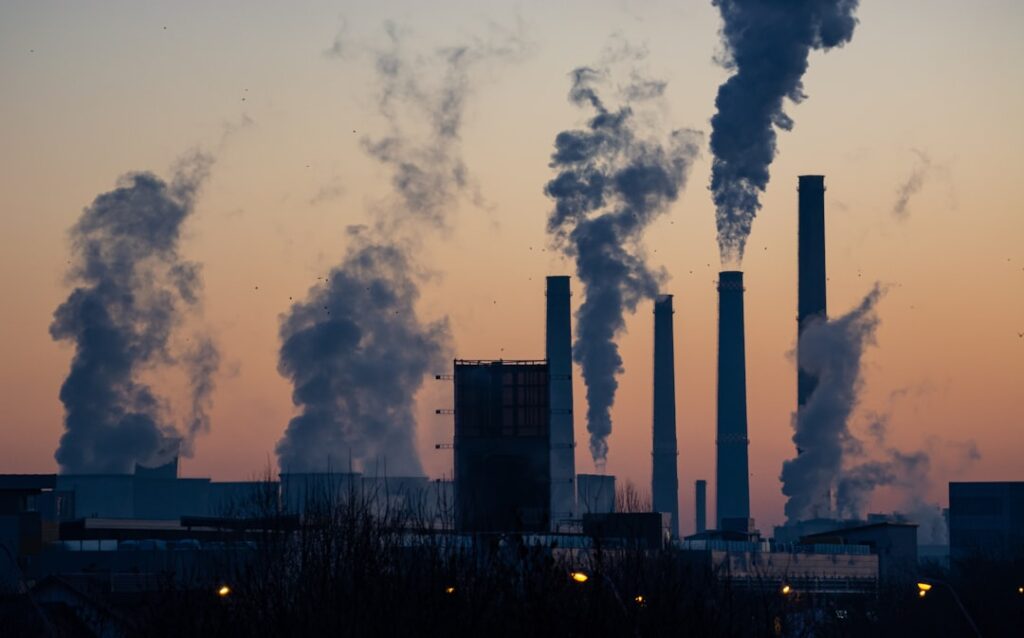
Carbon budgets and climate accountability in the UK

Why five-year limits matter

The framework comes from the Climate Change Act 2008. Carbon budgets create legally defined emissions limits over successive five-year periods, making it harder for governments to postpone most of the work until the final years before 2050.

The independent Climate Change Committee advises on the level of future budgets and reports on progress. Parliament and government then have to confront the gap, if one emerges, between the target on paper and policies in areas such as electricity, buildings, transport, industry and land use.

A target is not a delivery plan

Carbon budgets do not themselves build power lines, insulate homes or change industrial processes. Their political significance lies in forcing different policy decisions to be judged against a common emissions constraint.

This is where accountability becomes more difficult. A government may accept the overall target while disagreeing over the speed, cost or distribution of particular measures. The real debate is therefore often about who pays, which infrastructure arrives first and how much uncertainty policymakers are prepared to tolerate.

What happens when delivery falls behind?

The system creates political and legal pressure for ministers to explain progress and publish plans, but it does not remove political choice. Governments still decide which taxes, regulations, subsidies and infrastructure programmes they are willing to use.

That distinction matters. Carbon budgets can expose a delivery gap; they cannot by themselves resolve disagreements about planning, household costs, industrial competitiveness or public spending.

For readers, the useful question is not simply whether ministers repeat the net-zero target. It is whether the policies already in place are credible enough to meet the next legally binding carbon limit.

Read the Climate Change Committee’s explanation of UK carbon budgets.

Share

Editor's Pick

Global Affairs

Why Europe Still Struggles to Coordinate Defence

European Defence Policy remains one of the most complex policy domains in international affairs, defined by a persistent puzzle: if European governments fundamentally...

Voices

Why Press Freedom Is an Early Warning Sign

Media Freedom often acts as an institutional barometer, shifting long before wider democratic checks and balances show visible signs of strain. When public...

Green Policy

Can Britain Compete in the Green Subsidy Race?

Green Industrial Policy has become the dominant battleground of modern economic strategy, reshaping how governments approach trade, manufacturing, and public expenditure. Across the...

Global Affairs

Where Human Rights Law Meets Democratic Politics

Human Rights Law forms the structural backbone of modern constitutional governance, intersecting constantly with democratic politics, parliamentary sovereignty, and the daily administration of...

Economic Affairs

Why Tariffs Are Back in Fashion

Trade protectionism has quietly returned to the centre of global economic policymaking, reshaping how governments think about borders, industries, and national security. For...

Society

How Ready Is Britain for Another Public Health Emergency?

Global Health Security requires an institutional readiness audit rather than a set of clinical recommendations or diagnostic guidelines. When Westminster and Whitehall evaluate...

Related Articles
Can Britain Compete in the Green Subsidy Race?
Green Policy

Can Britain Compete in the Green Subsidy Race?

Green Industrial Policy has become the dominant battleground of modern economic strategy,...

Carbon Markets Work Differently Than Their Critics — and Supporters — Suggest
Green Policy

Carbon Markets Work Differently Than Their Critics — and Supporters — Suggest

Carbon Markets remain one of the most misunderstood and politically polarized mechanisms...

How a COP Deal Is Actually Negotiated
Green Policy

How a COP Deal Is Actually Negotiated

COP Climate Summits operate as intricate diplomatic machinery where global climate policy...

The Hardest Part of the Energy Transition Is Political
Green Policy

The Hardest Part of the Energy Transition Is Political

Energy transition discussions often become bogged down in laboratory results, engineering timelines,...