
UN Security Council permanent membership provides the United Kingdom with structural leverage inside the international system that extends well beyond symbolic prestige. For British foreign policy, holding one of the five permanent seats—alongside the United States, France, China, and Russia—delivers tangible diplomatic mechanisms that shape how London interacts with global security challenges, economic pressures, and international law.
Rather than functioning as a ceremonial office inherited from the post-1945 settlement, the seat operates as a daily working instrument. It grants Britain direct entry into rooms where crises are formally framed, text is negotiated line by line, and international sanctions or mandates are authorized. To understand what the position actually delivers, one must examine the specific mechanics of agenda-setting, text drafting, diplomatic access, and the strategic restraint surrounding the veto.
Practical Privileges of Permanent Membership
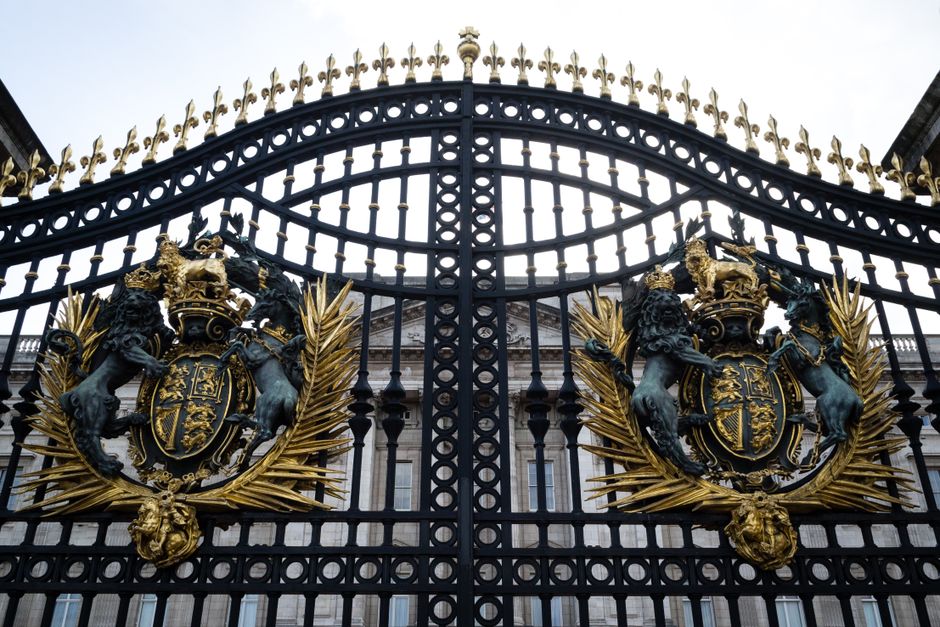
The primary advantage of permanent membership is continuous operational presence. Elected members rotate onto the council for two-year terms, limiting their ability to build long-term institutional memory or direct multi-year policy trajectories. Permanent members, however, maintain permanent diplomatic teams in New York whose institutional knowledge spans decades.
This permanence allows British diplomats to steer the monthly council calendar, decide which regional crises receive formal attention through briefings or resolutions, and maintain ongoing relationships with the UN Secretariat. It also ensures that London is never excluded from major security conversations involving international law, peacekeeping mandates, or emergency responses.
Agenda-Setting and Drafting Power
Much of the influence wielded by the UK UN Security Council delegation occurs before any public debate or formal vote takes place. Britain frequently acts as a “penholder” for specific country files and thematic issues, meaning its diplomatic mission takes the lead in writing the initial drafts of resolutions and statements.
Drafting text is an exercise in structural power. By choosing which words are included, omitted, or qualified in a draft resolution, the penholder establishes the baseline for all subsequent negotiations with the other fourteen council members. When the UK drafts a resolution on maritime security, sanctions implementation, or regional conflict, it sets the parameters within which international expectations and legal obligations are defined.
This drafting role also intersects with broader international economic and regulatory measures. When multilateral restrictions are debated, the council’s framework often interacts with UK sanctions and allied financial measures, aligning London’s national enforcement tools with broader international mandates.
The Mechanics of the Veto
The veto power held by the five permanent members is frequently discussed in popular commentary as a blunt instrument used to block major global decisions. In practice, the modern British approach to the veto is characterized by extreme restraint.
London has not cast a veto since the 1980s, reflecting a diplomatic strategy focused on consensus-building rather than confrontation. Instead of using the veto to defeat resolutions outright, British delegates use the threat of a veto during private negotiations to shape text, remove unacceptable clauses, or protect vital national interests before a vote is ever called.
This quiet leverage prevents diplomatic deadlocks from developing into public failures. By signalling clear red lines behind closed doors, British diplomats ensure that final texts remain acceptable to London without requiring dramatic showdowns in the council chamber.
Legal Reach and Enforcement Limits
A common misconception is that Security Council resolutions possess direct, self-executing enforcement powers capable of compelling states to change their behavior automatically. In reality, the legal capabilities of the council depend entirely on the specific chapter of the UN Charter under which a resolution is adopted.
Resolutions passed under Chapter VII can create legally binding obligations on all member states regarding peace, security, and coercive measures. However, even these binding resolutions have clear limits:
- They lack an independent standing police force or military, relying instead on voluntary contributions of troops and assets from member states.
- Their implementation depends on the administrative and enforcement capacity of individual national governments.
- They cannot overcome the active resistance of a major power or a determined sovereign state without broad international cooperation.
- Their effectiveness is frequently constrained by domestic political considerations within the countries tasked with enforcing sanctions or mandates.
Consequently, a Security Council mandate provides legal authorization and international legitimacy, but it cannot substitute for the hard work of state cooperation, diplomatic pressure, and resource allocation.
The Debate Over Reform and Procedural Obstacles
The structure of the Security Council faces sustained international criticism. Critics argue that its composition reflects the geopolitical realities of 1945 rather than the modern distribution of economic and demographic power, pointing to the underrepresentation of Africa, Latin America, and major developing nations like India and Brazil.
Proposals for reform typically focus on expanding permanent and non-permanent membership categories and curtailing or regulating the use of the veto in cases of mass atrocities. While these arguments for legitimacy and broader representation are widely acknowledged, substantive reform remains blocked by formidable procedural obstacles.
Any amendment to the UN Charter requires the affirmative vote of two-thirds of the UN General Assembly and the ratification of all five permanent members. Because permanent members hold individual vetoes over charter amendments, any proposed structural change that diminishes their own privileges faces insurmountable institutional hurdles.
Conclusion
Britain’s seat on the Security Council is neither a magical guarantee of global dominance nor an empty relic of past power. It is a specialized institutional tool. It provides London with continuous access, agenda-setting authority, and drafting power that would be difficult to replicate through other diplomatic channels. While constrained by enforcement limits and deep-seated debates over international legitimacy, the seat remains one of the primary structural mechanisms through which British foreign policy maintains a direct line into global crisis management and international law.
Sources
- United Nations Security Council Official Documentation and Charter Guidelines
- British Foreign, Commonwealth & Development Office Institutional Reports
- Multilateral Diplomacy and International Law Research Papers